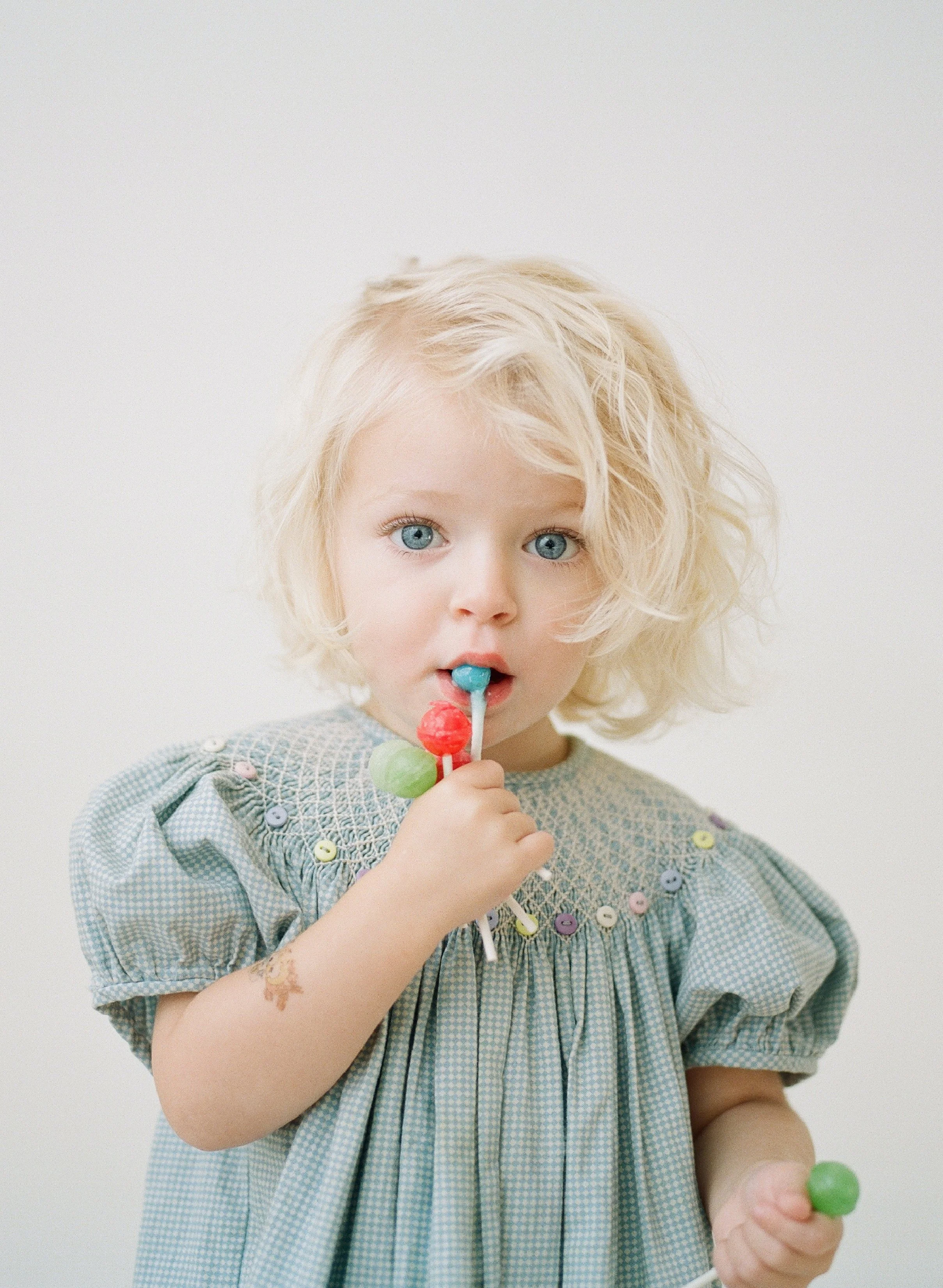
You Were Always You with With Sandra Coan
Sandra Coan is an award-winning photographer, industry educator, best-selling author, and Westcott Top Pro. Based in Seattle, she is known for her modern, minimalist approach to newborn and family photography and for creating timeless images that celebrate children and families exactly as they are. In addition to running her studio, Sandra teaches photographers around the world how to create natural-looking light with strobes and flash. Across her studio work and education, her approach returns to the same priority: making room for people to be seen exactly as they are.

For Sandra Coan, some of the most revealing photographs of childhood are the ones whose significance takes years to understand. Her own children are 20 now. Looking back at their baby photographs, she recognizes expressions, gestures, and small details that still belong to them today. What once seemed like an ordinary tilt of the head has become evidence of a personality already taking shape.
“At the time I took those photographs, I didn't know those things were part of who they would become,” she says. “I was just photographing what I saw.”
That experience informs the way Sandra photographs other families. She pays attention to what a child looks like, but also to the hints of identity that a parent might recognize more clearly decades later.
“You're recording things whose significance you don't even understand yet.”
A Beginning She Hadn’t Planned
Sandra’s photography business began in 1999, while she was working full time as a kindergarten teacher. Despite having a master’s degree, she qualified for food stamps and needed another source of income.
“Honestly, I kind of fell into it.”
A pregnant friend became the unexpected starting point. Sandra had taken maternity photographs of her for fun, and the friend suggested offering photography as a way to earn extra money. Sandra began marketing herself as a maternity photographer. As those clients welcomed their babies, newborn sessions followed. Then came toddlers, children, and families returning as they grew.
More than 25 years later, that beginning has developed into a career built around the changing lives of families. Her visual approach, however, has moved toward less.
“When you're starting out, it's easy to think you need to add things to make an image interesting,” she explains. “Over the years, I've learned that I'm much more interested in taking things away.”
The baby, child, or family becomes the center of attention. Relationships and personalities provide the interest she once might have looked for elsewhere.
Making Room for What Matters
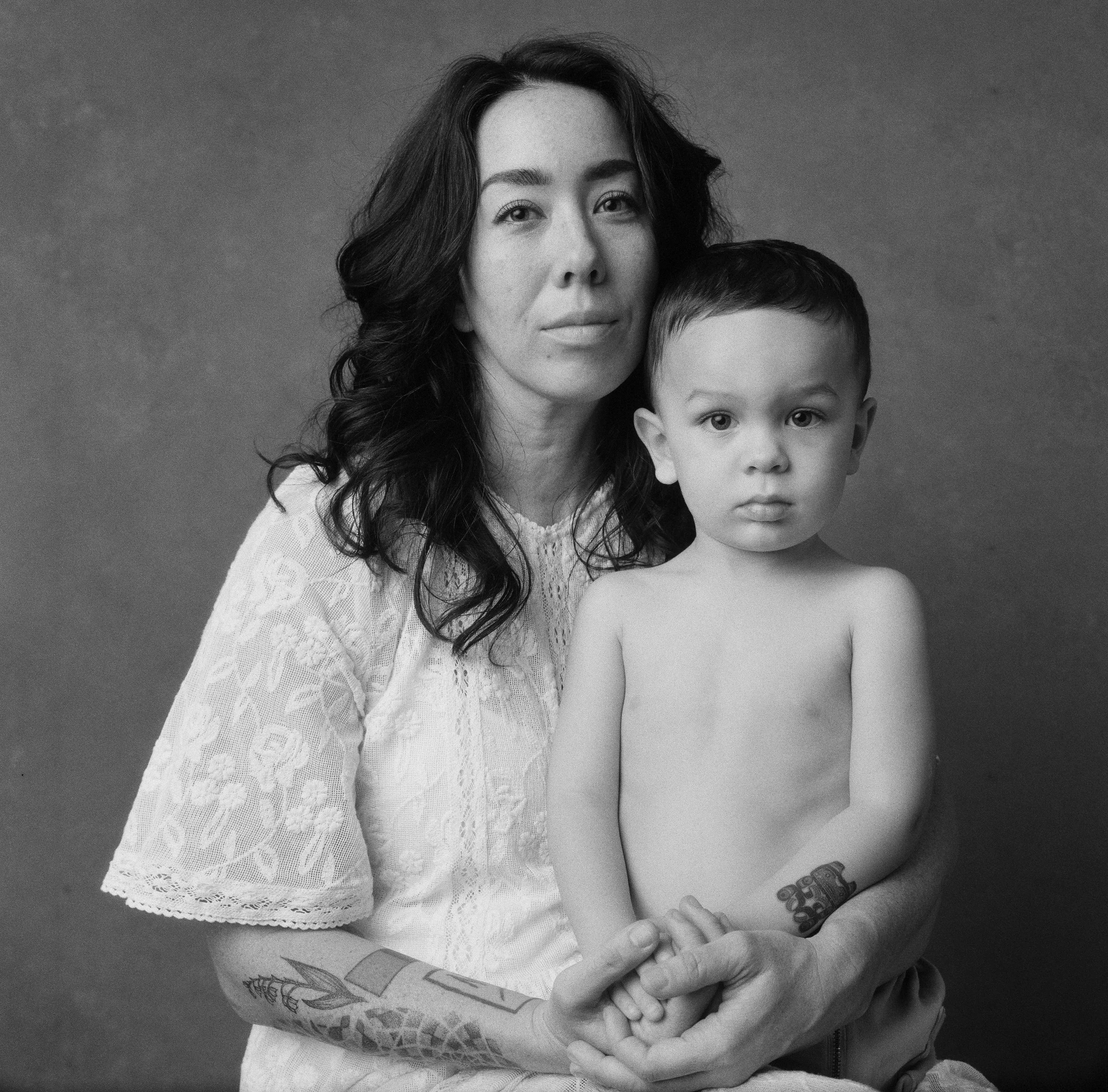
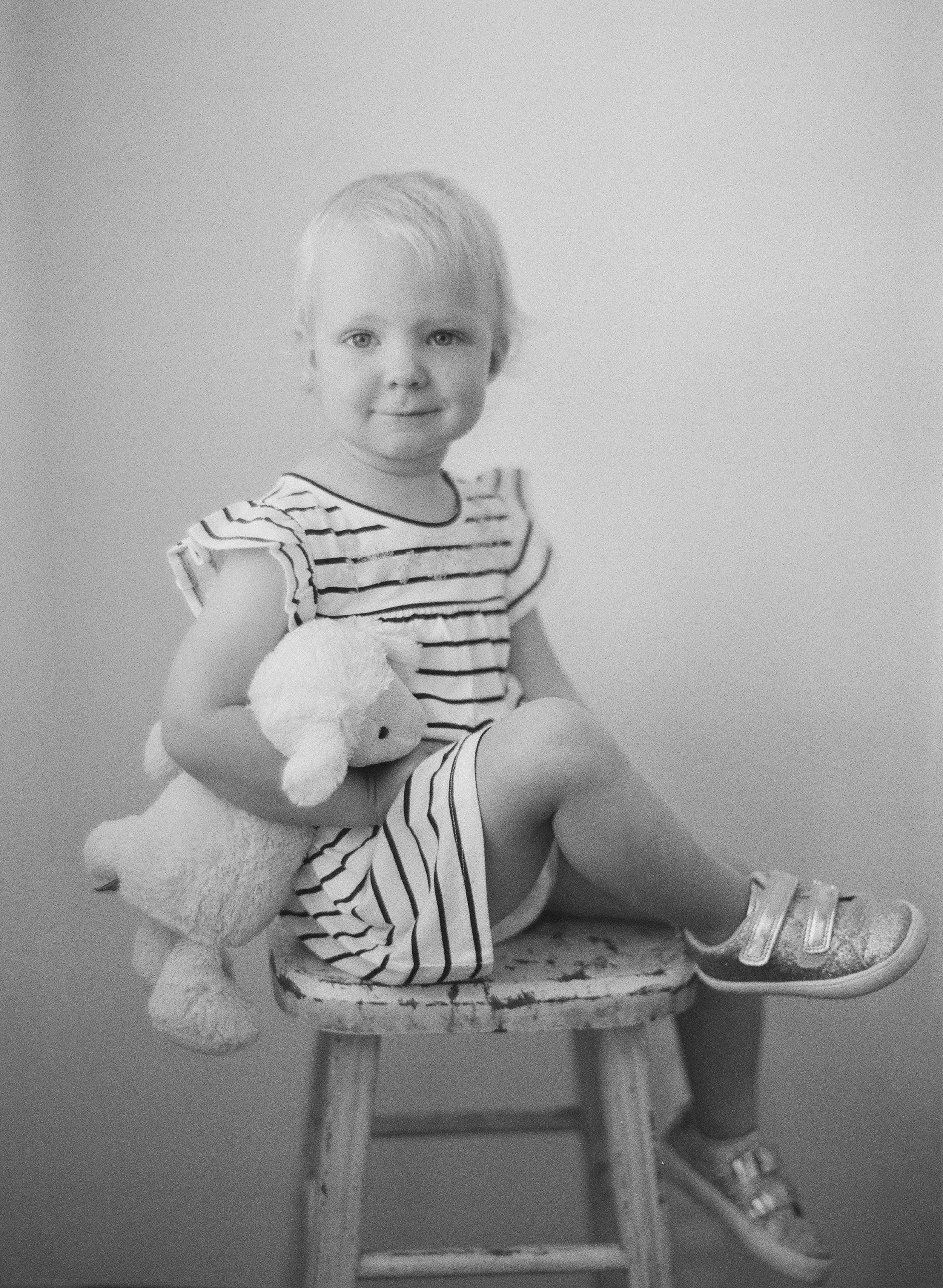
Sandra’s preference for simple backgrounds and clothing serves a practical purpose. She wants viewers to notice a face, a child’s hand wrapped around a mother’s, or the way someone leans into a parent. Props and elaborate sets can draw attention away from those details.
“I want you to see the relationships between people.”
She also considers how a photograph will feel long after the trends surrounding its creation have passed. Although she sees value in trends, she recognizes how strongly they can identify the era in which an image was made. Simplicity helps her keep the focus on the people.
“My hope is that someone can look at one of my photographs 30 or 40 years from now and not think about what was popular in photography at the time,” she says. “I want them to think, ‘Look how little she was.’”
That future encounter matters to Sandra. The photograph has a life beyond the session, and the choices she makes now shape what a family will return to later.
A Photograph That Feels Like a Memory
When Sandra describes nostalgia, she begins with familiarity. She is drawn to photographs that feel recognizable even when the viewer has never seen them before—images that recall family albums or something of their own childhood.
Softness, beautiful light, natural expressions, and uncomplicated surroundings contribute to that feeling. Film is part of it, too. Together, these choices allow her to create an image without filling the frame with information that dictates where someone should look or what they should feel.
“And maybe nostalgia isn't even about making something look old,” she reflects. “I think it's about making something feel like a memory.”
Her intention reaches beyond recording appearance. She hopes a photograph might eventually recall the feeling of a particular season in a family’s life: what it was like to hold that baby, stand beside that sibling, or be that small.
The Space Film Gives Her
Sandra’s affection for film includes a straightforward reason that may surprise photographers unfamiliar with her process.
“Honestly, one of the reasons I love film is because it's easier.”
She meters, establishes her light, and works toward creating the image in camera. Her lab develops and scans the film, returning photographs that require very little editing. Rather than planning extensive changes afterward, she makes her decisions before taking the picture.
Film also influences the pace of the session.
“I'm not taking hundreds of photographs hoping that one of them works. I'm watching. I'm waiting. I'm paying attention to what is happening in front of me, and then I take the picture when I see it.”
That rhythm supports her connection with the people she photographs. Without continually checking the back of a camera, she can stay attentive to their expressions and interactions. The process gives her space to watch a moment develop.
Letting Babies Be Babies
Sandra approaches newborn photography with the belief that babies already offer plenty to photograph. Their stretches, yawns, curled limbs, and fleeting expressions hold her attention without elaborate posing.
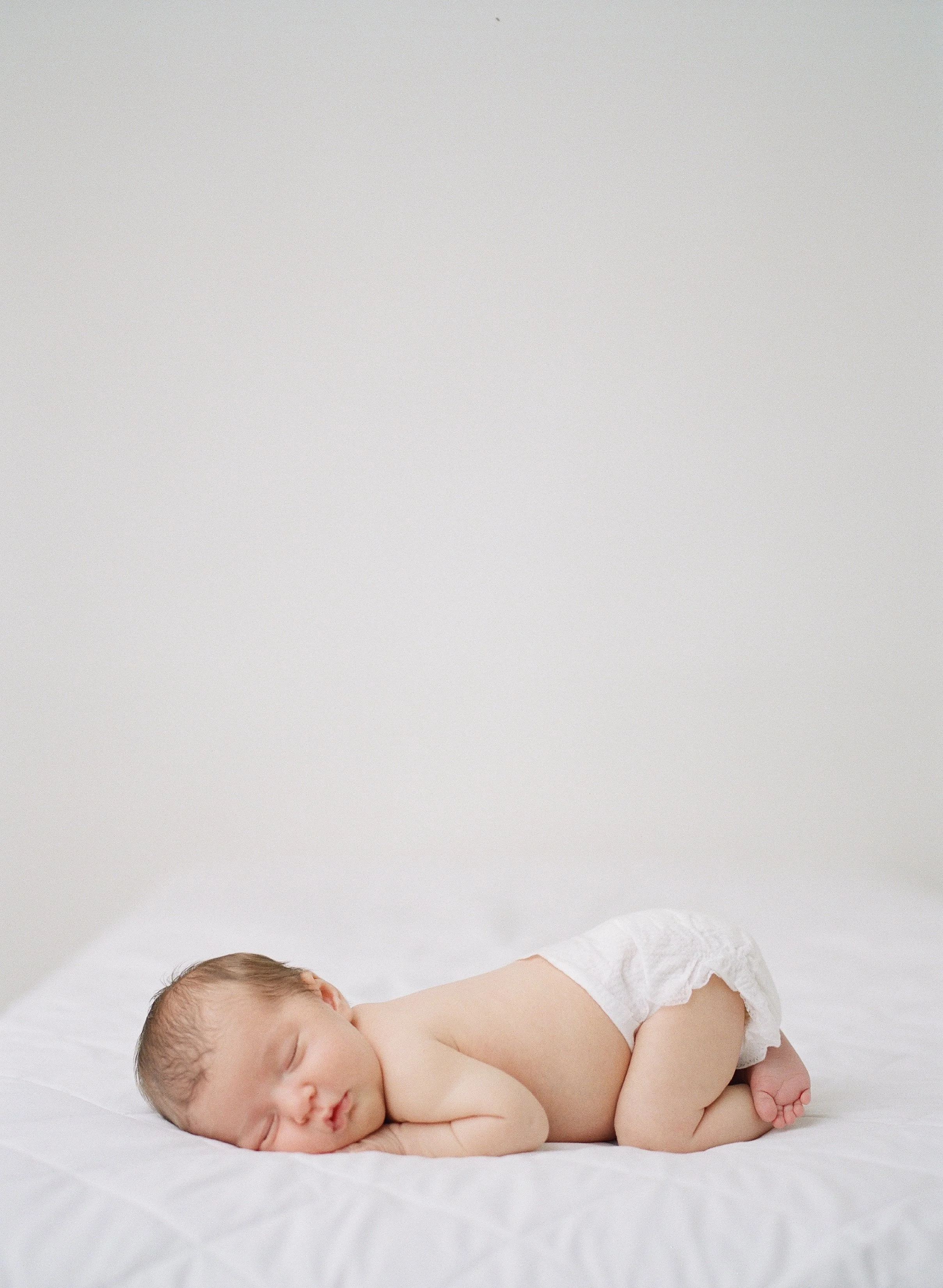
“I let babies be babies.”
Her process is baby-led. She may gently guide a newborn into beautiful light or make a small adjustment, but much of the work involves watching and responding to what the baby naturally does.
Scale is another detail she values. A newborn held against a parent’s chest or resting in their arms communicates just how small that child is. The relationship between their bodies becomes part of the record.
“They're only that small for such a short amount of time,” she says. “I want to remember that.”
Giving Children Permission to Arrive as They Are
Sandra’s years as a kindergarten teacher continue to inform her work. She is comfortable allowing children time to assess her, move around, or remain serious.
“The biggest thing is that I don't expect children to perform for me.”
A shy child does not need to become outgoing for a session to succeed. A restless child can move. Someone who needs more time can have it. Sandra recognizes that adults often arrive with a particular idea of a good photograph: a smiling child looking directly at the camera. Some of her favorite images emerge when that expectation loosens.
“My job isn't to make every child behave the same way in front of my camera,” she says. “My job is to notice who they are and make a photograph of that.”
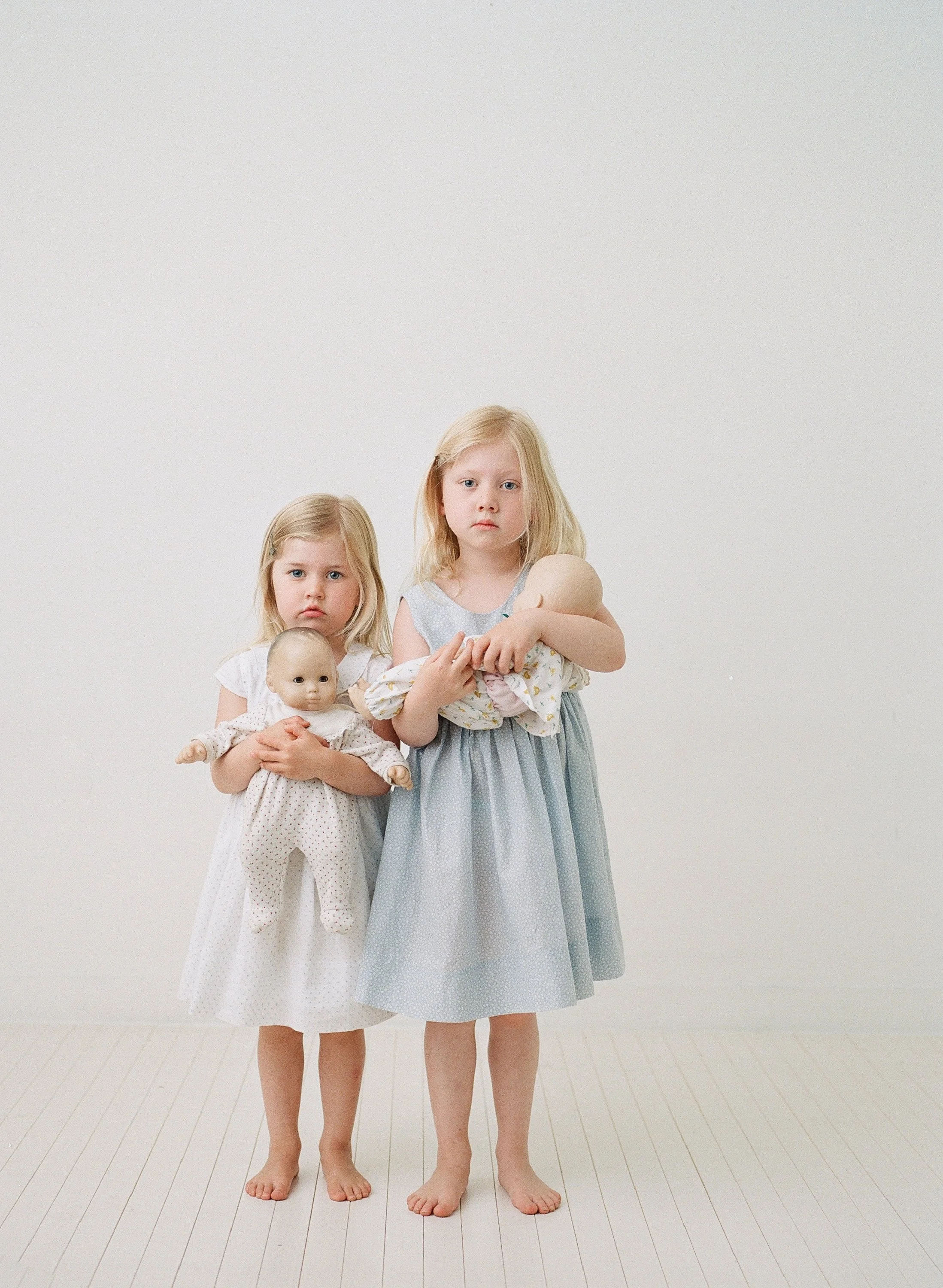
Her submission includes a photograph that embodies this approach: two little girls standing together, holding their dolls and looking directly at the camera with serious expressions. Sandra describes the beginning of a session as a time when children sometimes stare at her while deciding whether they trust her. It is a moment she enjoys enough to have written about it in The Complete Guide to Family Photography.
“I love how brave children are. They'll look you dead in the eyes and size you up.”
In this session, both girls held their dolls for comfort. Other photographs captured smiles, but Sandra’s favorite preserved their shared seriousness.
“They're both staring straight at me, holding their babies, and it's a little bit weird. And I love that about it.”
Their parents loved the photograph, too, and still talk about it. Its lasting appeal came from the particular personalities and emotions present at the beginning of the session.
Consistency That Creates Freedom
Sandra’s work has a recognizable framework. Her lighting, posing flow, and color palette are consistent, as is her preference for simple backgrounds and clothing. Those familiar elements allow her to concentrate on what changes with every session.
“For me, consistency is an opportunity for creativity.”
With the technical aspects of her process established through experience, she can devote more attention to helping people feel comfortable and noticing how they interact.
“But once a family steps into that framework, the photographs belong to them.”
She does not need each family to behave in the same way for the resulting work to feel like hers. Knowing her style gives her room to respond to the people in front of her. The consistency supports that attention rather than prescribing every expression or interaction.
Thinking About the Person Who Will Hold the Photograph
For photographers who feel pressure to follow trends, Sandra’s advice begins with looking closely at their own preferences.
“Learn what you love.”
She encourages photographers to study images they have returned to for years, alongside family albums, art, and movies. Understanding why those images evoke a feeling can help a photographer learn to create with greater intention.
Trends can be enjoyable. The difficulty, in Sandra’s view, arises when photographers make images out of obligation rather than connection.
Trends can be enjoyable. The difficulty, in Sandra’s view, arises when photographers make images out of obligation rather than connection.
After more than 25 years, her own work continues to become simpler. Beautiful light, careful attention, and enough room for people to be themselves remain essential. As she photographs a family, she is thinking about the person who may hold that image decades from now.
“We're making them for someone who might pick one up 20, 30, or 50 years from now and see someone they love.”
“That’s the audience I’m thinking about.”
Connect with Sandra
Website: www.sandracoan.com | Instagram: @sandracoan | TikTok: @sandracoanphotography