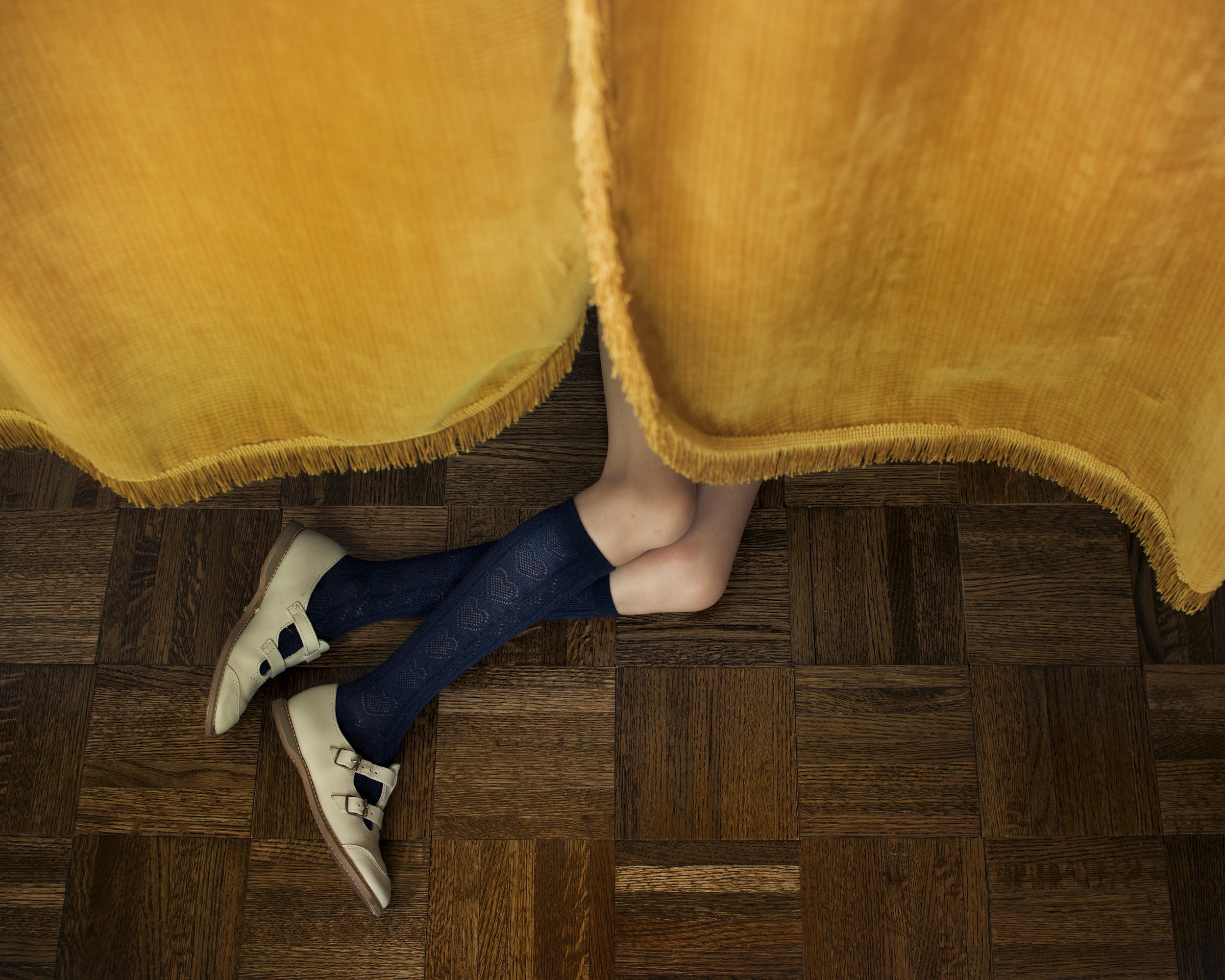
The Things We Stitch Together: Heather Evans Smith on memory, loss, and the art of mending
Photographs courtesy of Heather Evans Smith • Interview adapted from her written responses.
Heather Evans Smith is a North Carolina photo-based artist whose work reflects her southern roots, motherhood, womanhood and a whimsical imagination she relied on as an only child in a rural town. Her photographic imagery explores the ideas of memory, loss and family in conceptual settings.
Smith’s work has been featured in publications including The New York Times and Oxford American, and exhibited in venues such as the Fox Talbot Museum in Lacock, England, and the Nasher Museum of Art at Duke University. She is a Critical Mass Top 50 recipient (2014, 2018, 2021, and 2024), a 2022 Silver List artist, and the recipient of the CENTER 2022 Me&Eve Grant.
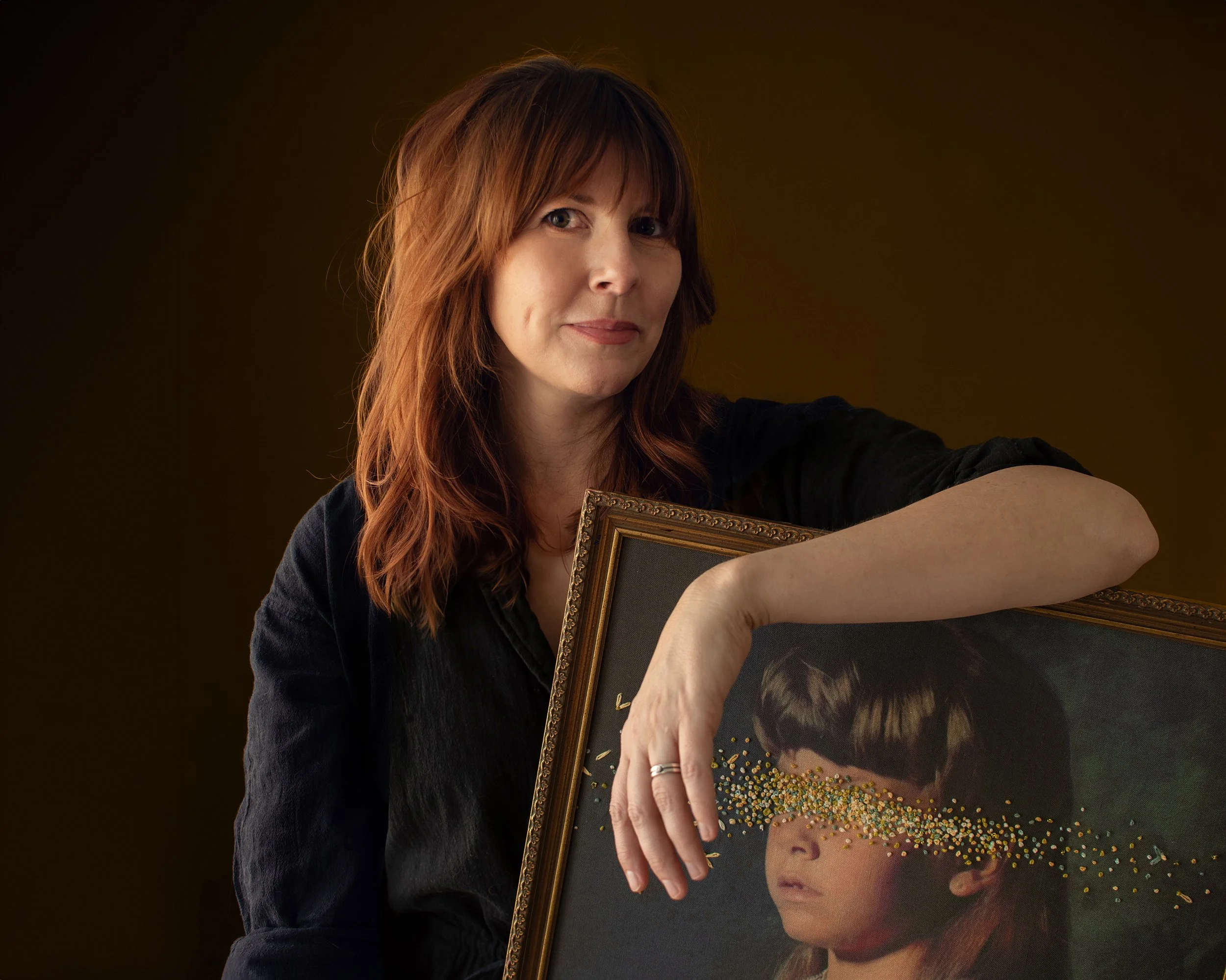
Artist Portrait
Smith has authored four monographs: Seen Not Heard (2016), Alterations (2020), and Blue (2022), along with her latest work, Skipping Sundays, which was published in April 2026.
Before sewing became a metaphor in Heather Evans Smith’s photographs, it was part of the world she shared with her grandmother. There were machines humming in a department-store alterations room, boxes of discarded buttons, and dressing rooms that became an unlikely childhood playground.
“My granny was the greatest love and loss of my childhood,” Smith recalls. Her grandmother worked as a seamstress, and the familiar surroundings of her workplace became inseparable from the memories of a relationship that ended too soon.
When Smith began Alterations, she initially considered photographing scattered recollections of their time together. But she kept returning to the room where her grandmother worked. “I started to think about how sewing itself could become a powerful metaphor for understanding loss.”
The project also gave her room to face a more difficult truth: she remembered being loved by her grandmother without having had the chance to know her fully as a person.
“When you’re young, you mainly see people through the lens of how they treat you,” she says. “But as you grow up, you start to appreciate them as complete human beings.”
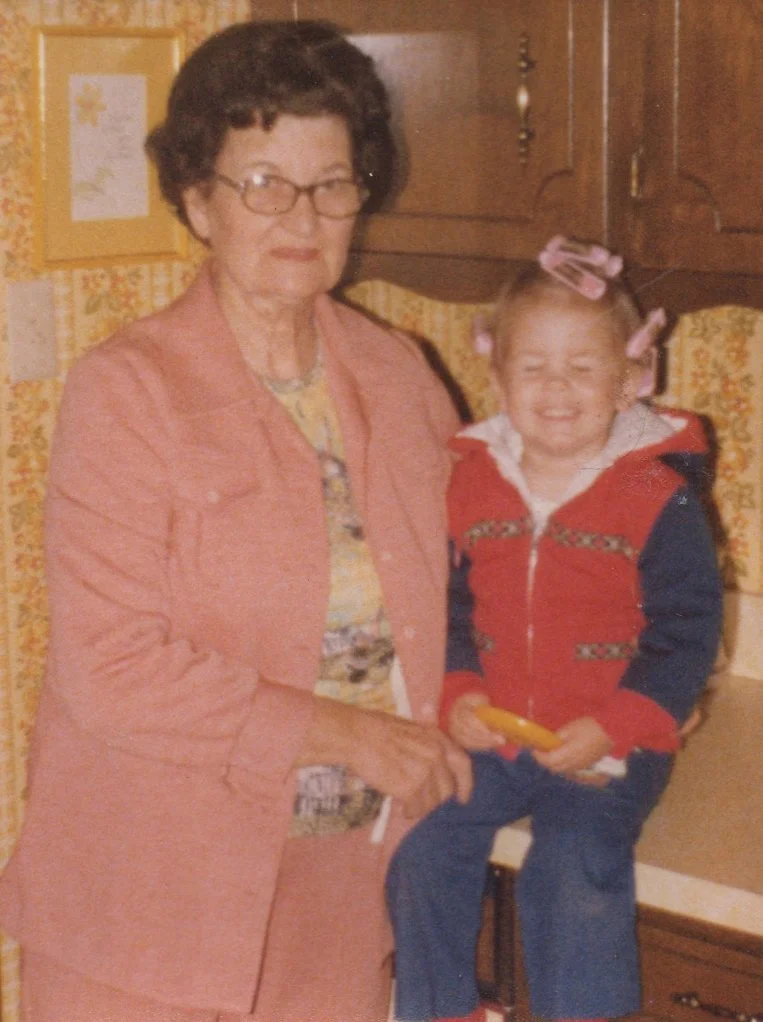
Heather with her grandmother
Smith builds her photographs patiently, often working from notes she has gathered on her phone. Her sets take shape in rooms throughout her home, where she combines natural light with vintage wallpaper, clothing, fabric, rugs, and housewares that recall specific eras of her family’s life.
“Some concepts develop slowly, brewing in my mind for anywhere from six months to a year before I’m prepared to shoot,” she explains. Others require only a few weeks. What matters is finding the objects that can carry an idea without spelling it out.
In one photograph, a Singer sewing machine appears perfectly ordinary until the viewer notices strands of hair wound around its spool. “This unexpected detail adds a deeply personal, human quality to the machine,” Smith says. The image asks us to look twice: first at the tool, then at the suggestion of a person bound to it.
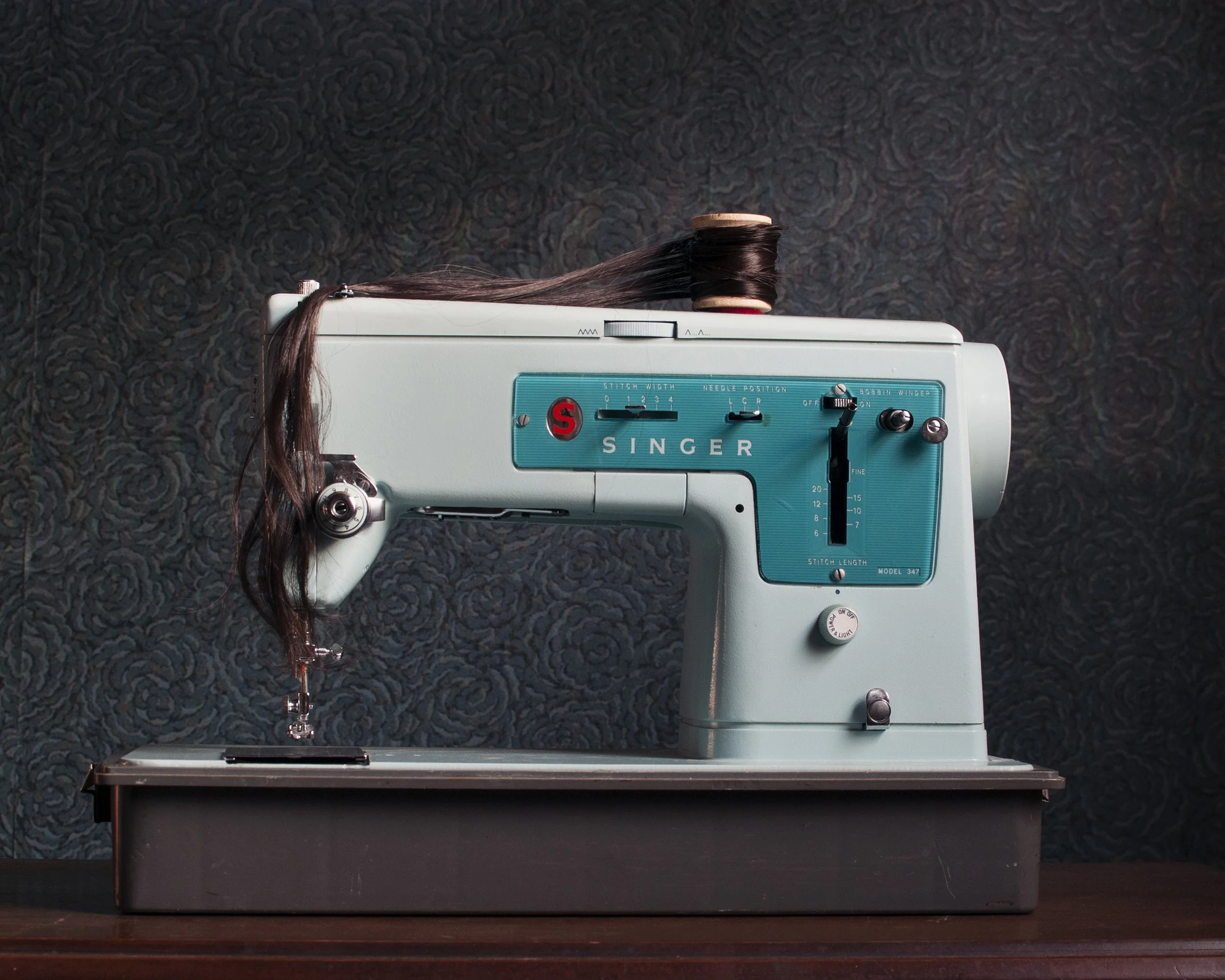
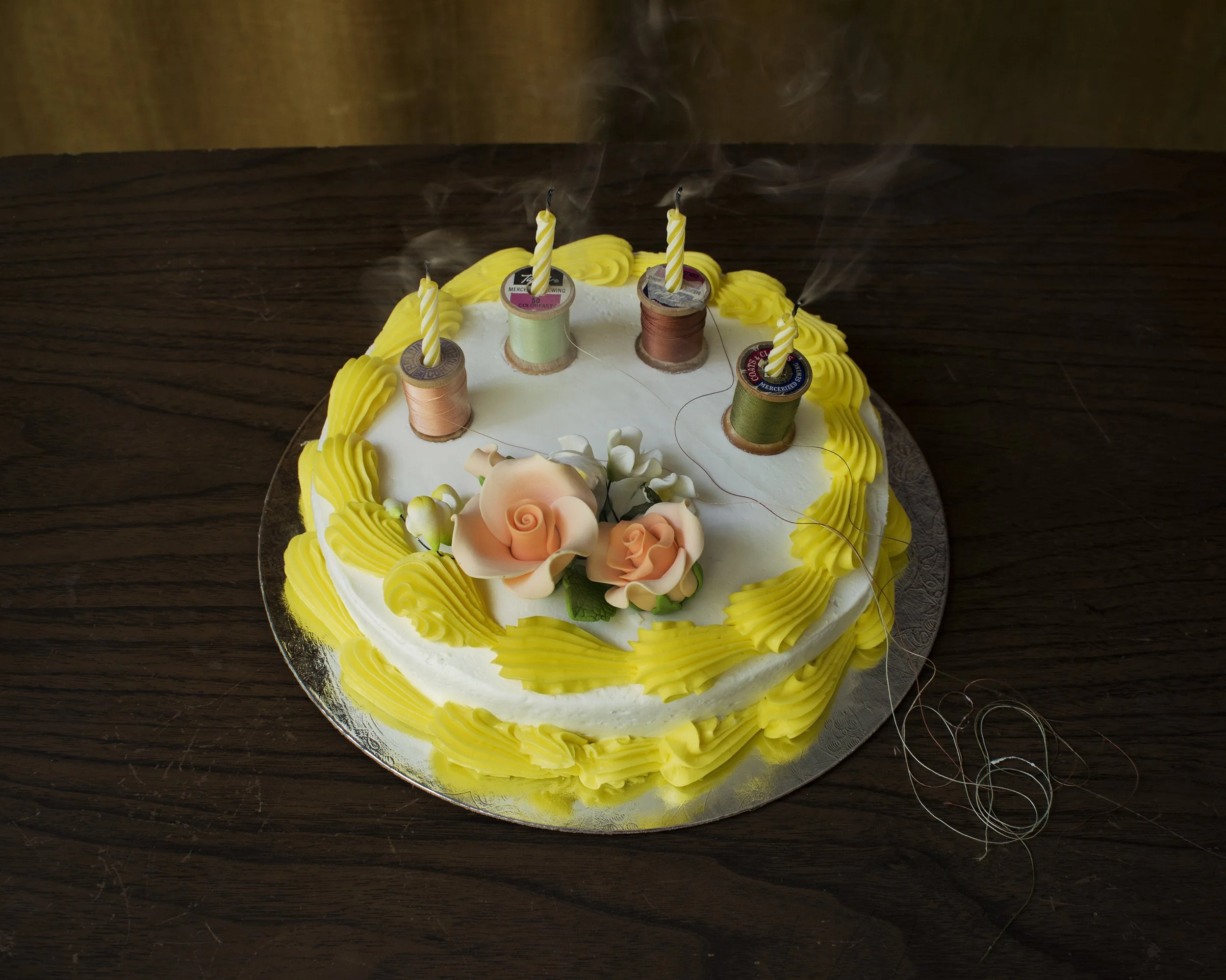
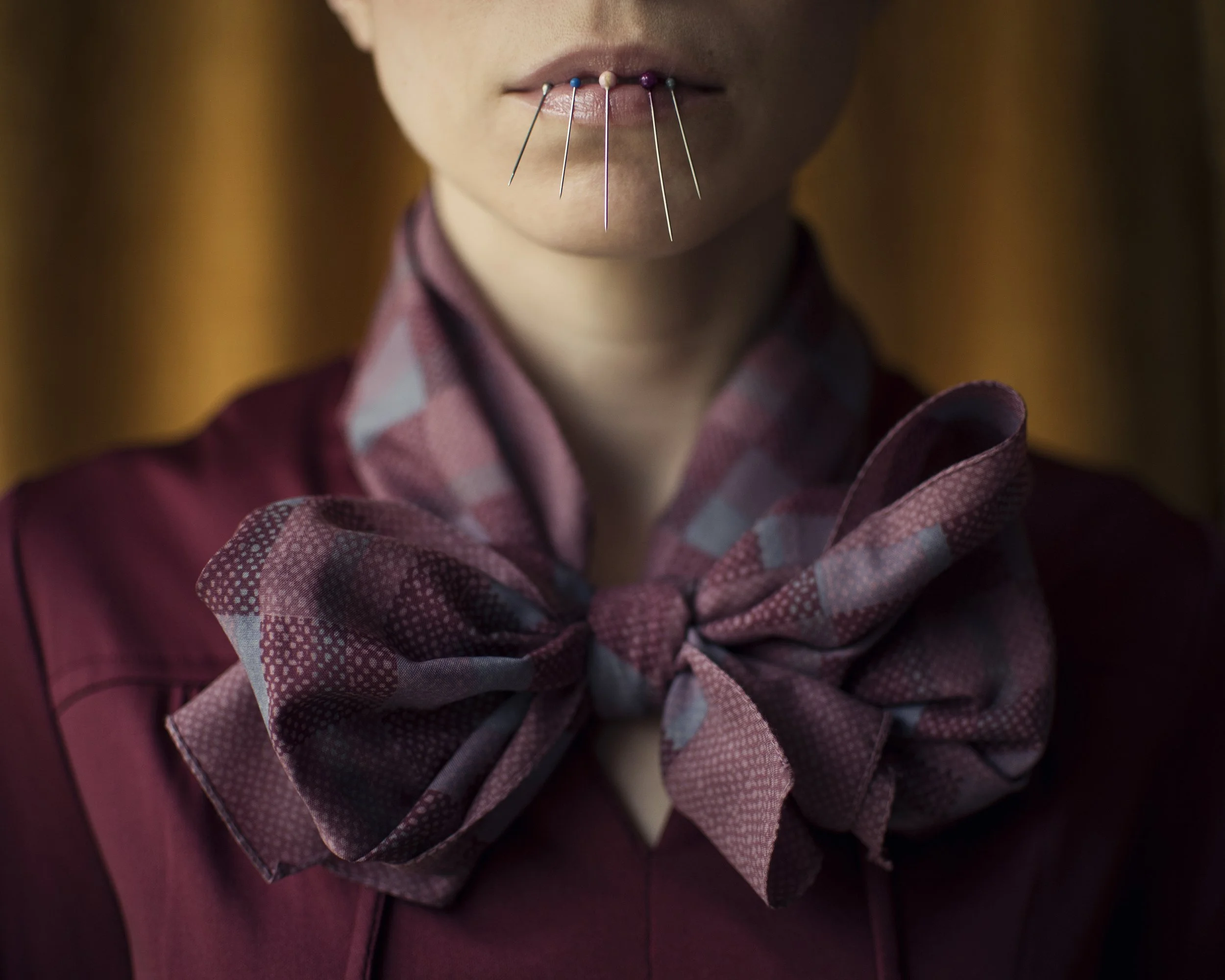
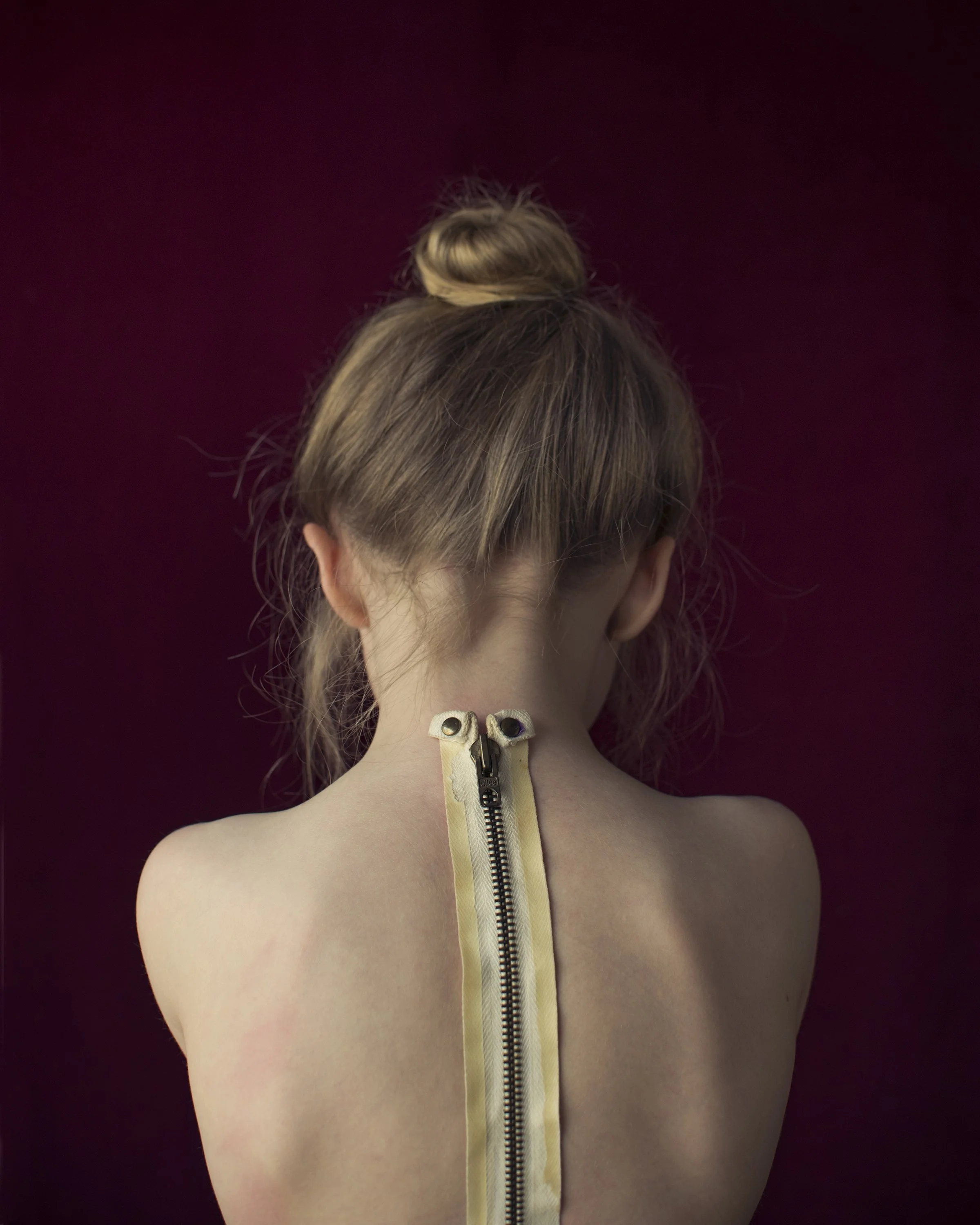
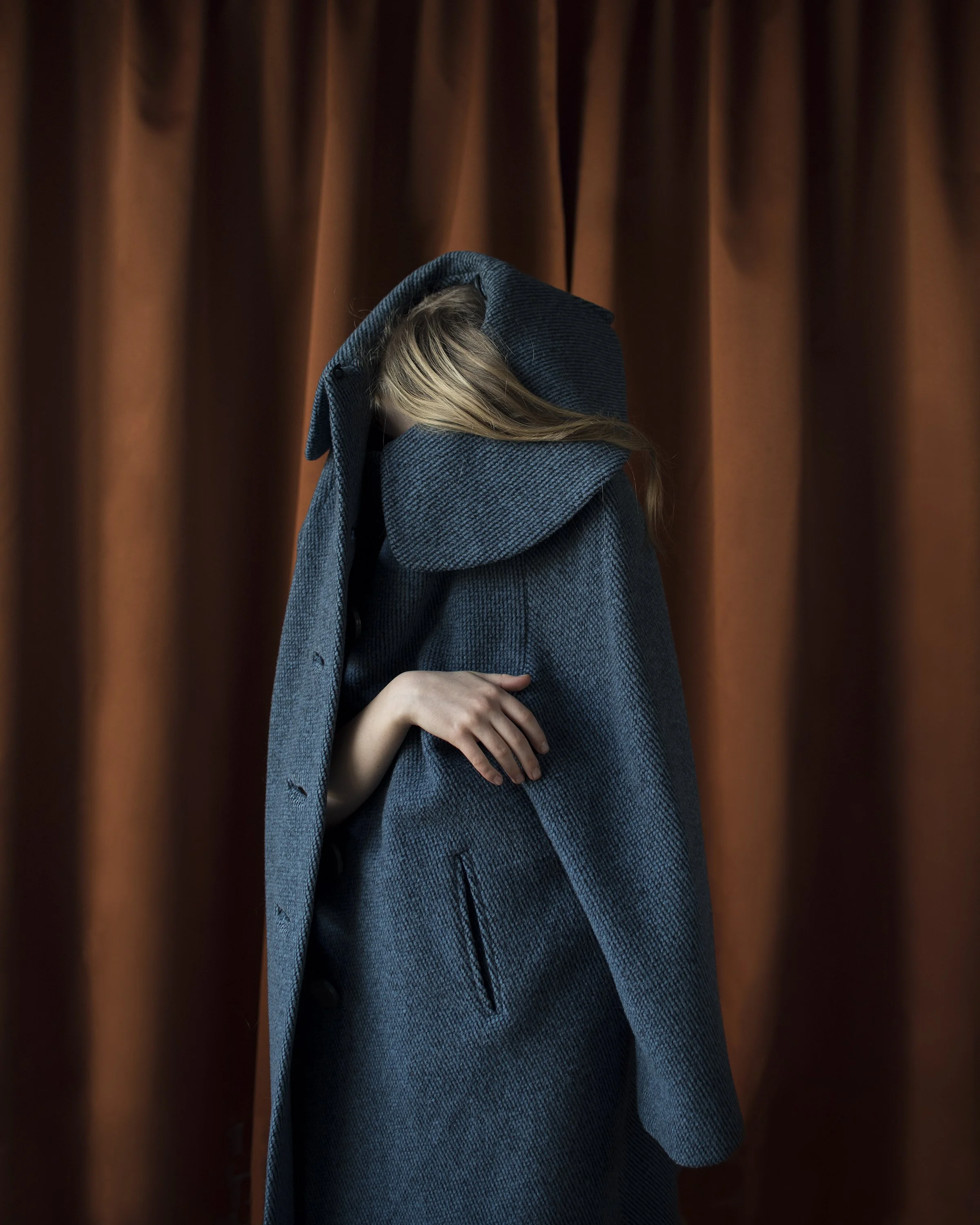
Ordinary tools take on unexpected roles throughout Alterations
“I love to take everyday items and use them in surprising ways,” she says. Her photographs often begin with something recognizable and change a single detail. The result is less an illustration of a memory than an invitation to consider what an object might hold.
The most surprising thing Smith learned while making Alterations was not about photography. It was how to sew. During a creative rut, she signed up for a class expecting to make a few pillow covers; instead, she found herself constructing garments.
That new skill changed how she saw the clothes her grandmother had made for her. “Now I can look at the clothes my granny made for me as a child and can truly appreciate her craftsmanship and see her touch in every stitch.” What she had once known simply as a child receiving handmade clothes became an adult’s understanding of the labor and ability behind them.
Her favorite image in the series, Curl, connects three generations. Inspired by a family picture of Smith with her grandmother and curlers in her hair, she arranged her daughter’s hair around old wooden thread spools. The photograph does not duplicate the original; it revisits its gesture through the materials of her grandmother’s profession.
“This has become not only my favorite image from the series but the most popular one with collectors,” Smith says.
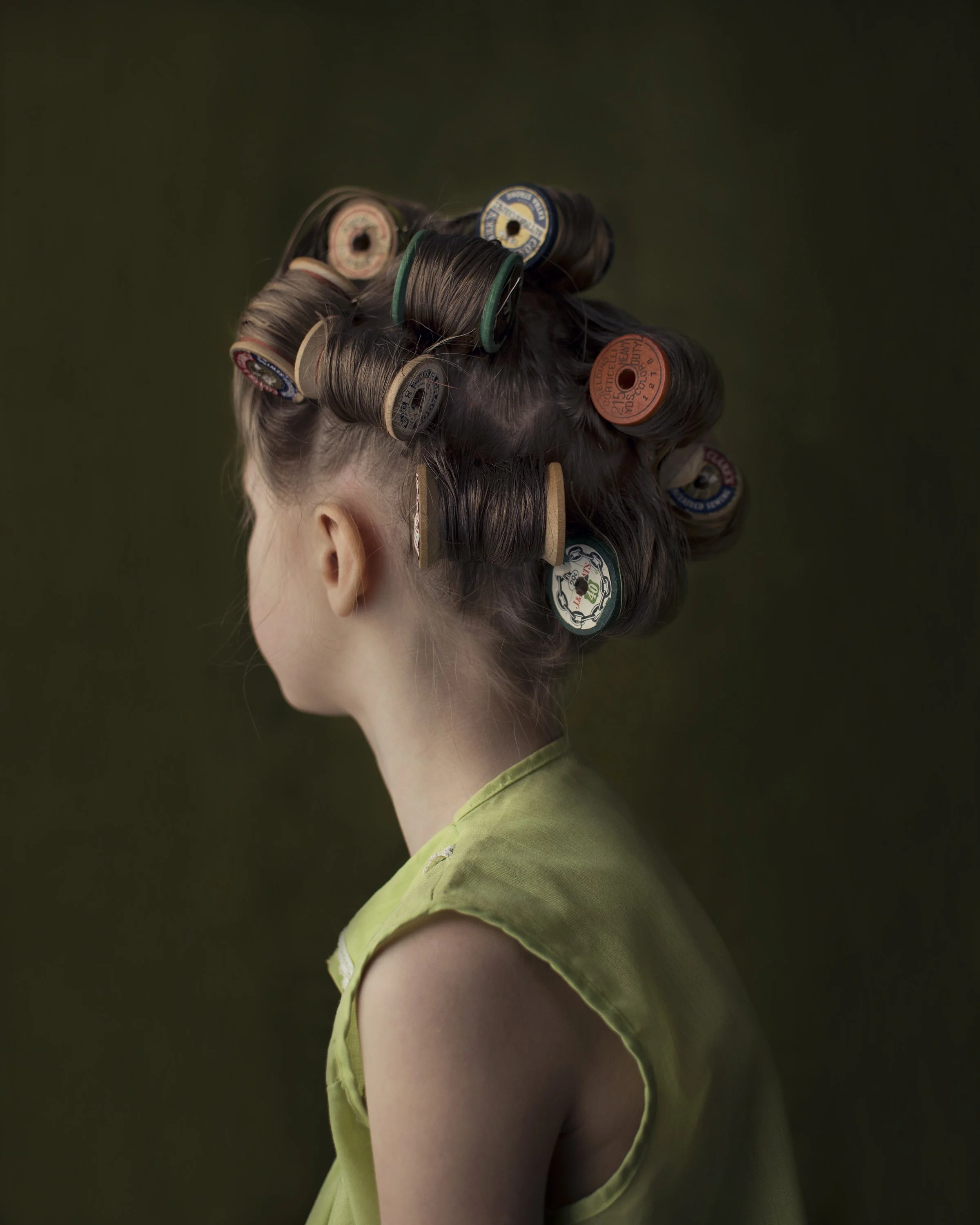
Curl — inspired by a photograph of Smith and her grandmother.
The response has affirmed her interest in making images from intensely specific experiences—images that leave enough room for viewers to recognize memories of their own.
Alterations is rooted in Smith’s history, but she does not expect every viewer to know that history before engaging with the photographs. The sewing references offer a way in; the meanings people bring to them may be different from her own. “I’m always curious to hear what folks have to say about my photographs,” she says, “and their feedback sometimes helps me see the work in a completely new light.” This exchange is part of what has encouraged her to keep drawing from experiences that feel difficult to share.
After completing Alterations, Smith turned to other personal subjects, including depression and religious doubt. “It’s scary to be that vulnerable with your art,” she says, “but those are the series that resonate the most with viewers.”
The shift does not leave Alterations behind so much as extend the method Smith discovered through it: start with what is particular and unresolved, and make an image rather than a declaration. She cannot ask her grandmother the questions adulthood has brought her. She can, however, study a garment’s stitches, remake a remembered photograph with her daughter, and find new ways to see what she still has.
Connect with Heather
Website: www.HeatherEvansSmith.com • Instagram: @heatherevanssmith