Turning Detours Into Direction
Most of us begin with some version of a plan. We picture where we’re going, how long it will take, and what life might look like once we arrive. We set goals, make timelines, and start moving forward with the quiet expectation that effort will eventually lead us exactly where we intended to go.
Then life changes the route.
An opportunity falls through. A relationship ends. A business evolves beyond its original purpose. We move somewhere new, outgrow a familiar version of ourselves, or realize that the dream we worked toward no longer feels like ours. Suddenly, we’re standing in the middle of a life that looks nothing like the one we planned.
Detours can feel like failure when we’re still close enough to the original path to see what we thought would happen. It’s easy to look at other people moving steadily forward and believe we’re the only ones who’ve lost our way. We may wonder whether we made the wrong decision, missed our chance, or wasted time building something we were never meant to keep.

But a changed route doesn’t mean the journey has stopped. Sometimes it means we’ve finally reached the point where a more honest direction can begin.
The hardest part of a detour is often the space between what ended and what hasn’t taken shape yet. There’s no clear sign telling us which way to turn. We’re asked to keep moving without the reassurance of knowing where the road will lead.
That uncertainty can be uncomfortable, but it can also reveal things that certainty never could.
When the original plan falls apart, we’re given an opportunity to look more closely at what we actually want. Not what once made sense. Not what other people expected. Not what we’ve invested too much time in to leave behind. We get to ask whether the destination still belongs to us.
Sometimes the answer is yes, and the detour simply requires a different way of getting there. Other times, we realize we’ve been following a plan created by an earlier version of ourselves. Changing direction isn’t giving up on that person. It’s allowing her to grow.
Creativity is full of these moments. A project doesn’t turn out the way we imagined. The light changes, the location is unavailable, or the idea that felt brilliant in our minds looks entirely different once we begin. Our first instinct may be to force the original vision into existence, even when the work is quietly asking to become something else.
Some of our most meaningful work appears when we stop resisting that shift.
A photograph can become more powerful because the weather changed. A business can become more sustainable after an offer fails. A creative voice can become clearer after we’ve tried on styles that never felt quite right. What looks like a wrong turn from the outside may be the exact experience that teaches us what we couldn’t have learned on the easier road.
Detours also ask us to slow down. When the familiar route disappears, we become more aware of our surroundings. We notice what’s working, what feels heavy, and what we’ve been carrying simply because we’ve carried it for a long time.
This pause can feel frustrating when we’re eager to make progress, but direction isn’t always found through speed. Sometimes it’s found by paying attention.
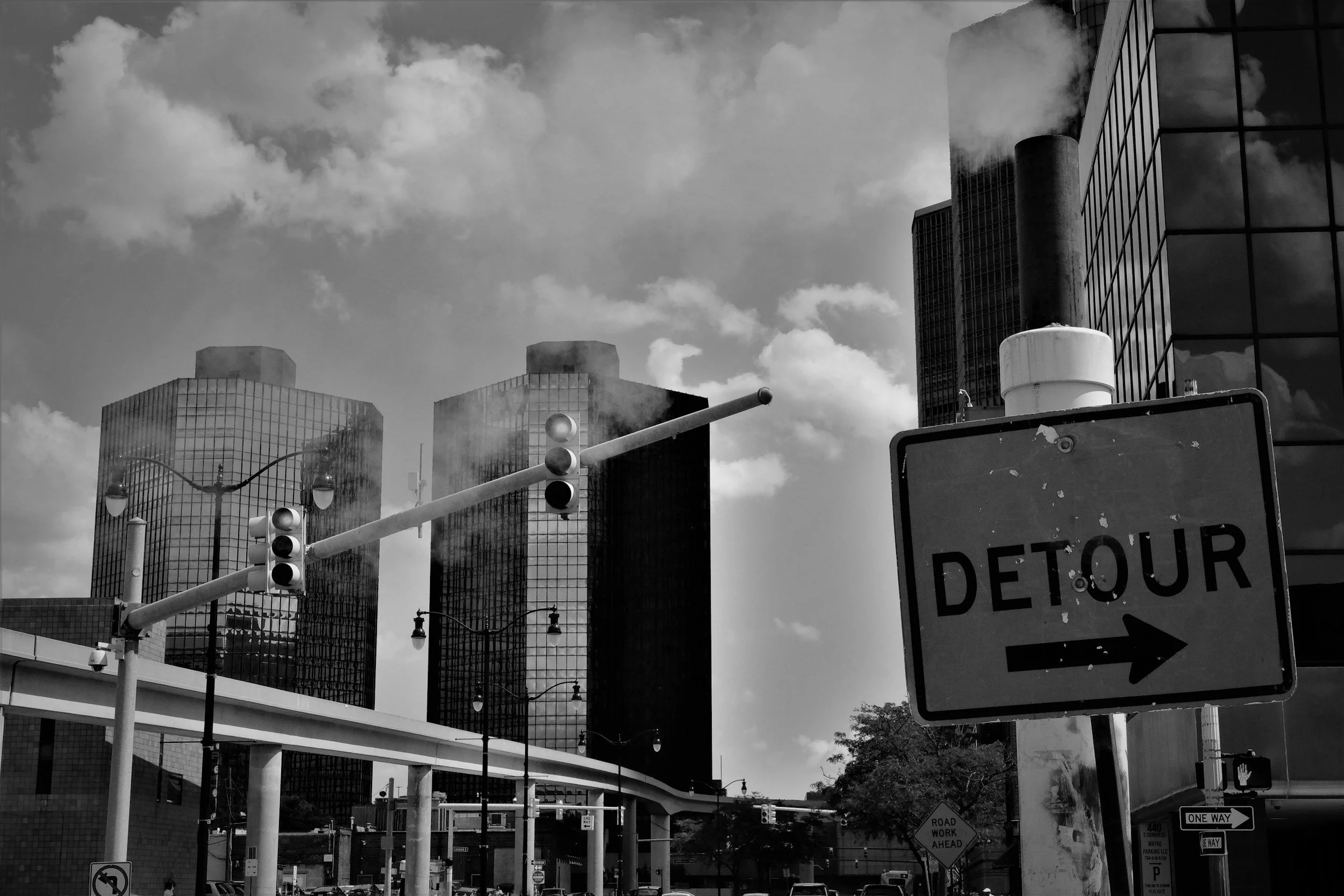
Notice what continues to call you back. Notice which ideas bring energy instead of obligation. Notice where you feel most like yourself and where you’re performing a version of success that no longer fits. These small observations can become markers, gently guiding you toward what comes next.
Turning a detour into direction doesn’t require finding one perfect answer. It can begin with one honest choice.
You can stop creating work that leaves you empty. You can change the way you run your business. You can begin again before you feel completely ready. You can release a timeline that has become a source of shame. You can choose the next step without knowing the ten that will follow it.
Direction is often built this way—not through one dramatic realization, but through a collection of small decisions that bring us closer to ourselves.
There will still be moments when you miss the road you thought you’d be traveling. You’re allowed to grieve the plans that didn’t happen, even when you’re grateful for the life forming in their place. Growth doesn’t require pretending that every disappointment was easy or that every ending immediately made sense.
Some experiences only become meaningful after we’ve traveled far enough to see them differently.
Looking back, we may recognize that the rejection protected us from something that wasn’t right. The delay gave us time to become ready. The ending created space for work, relationships, and possibilities we couldn’t see while we were holding tightly to the original plan.
That doesn’t mean every difficult experience happens for a reason. It means we’re capable of creating meaning from what happens to us.
We can carry the lessons without carrying the belief that we failed. We can honor how hard the road was while still choosing to continue. We can let the detour change us without allowing it to define the limits of where we’re able to go.
The open road has never promised certainty. It offers possibility. It stretches beyond what we can see and asks us to trust that movement still matters, even when the destination isn’t clear.
Maybe you aren’t lost. Maybe you’re simply between the direction you were given and the one you’re learning to choose for yourself.
Keep going. The road may look different from the one you planned, but different doesn’t mean wrong. Sometimes the turn you never wanted to take is the one that finally leads you toward a life that feels like your own.